
Buckminster Fuller: How a Sense of Purpose Saved His Life, and Gave the World a Marvellous Creator
A Genuine Sense of Purpose Rewires Your Brain.
Understanding this could change your life, too.
5 minute read


Idea in Brief
This is the idea in brief section. This is the idea in brief section. This is the idea in brief section.
See the Notes section to the Text Doc in the Scriv File for the Idea in Brief section. My feeling is the reader will want to get a sense real fast of how this article can benefit THEM … by learning these latest insights from the science of purpose … and doing the relatively SIMPLE things this science indicate we should do … in order to get the positive energy boost that a genuine sense of purpose will give you.
Related Topics or Articles
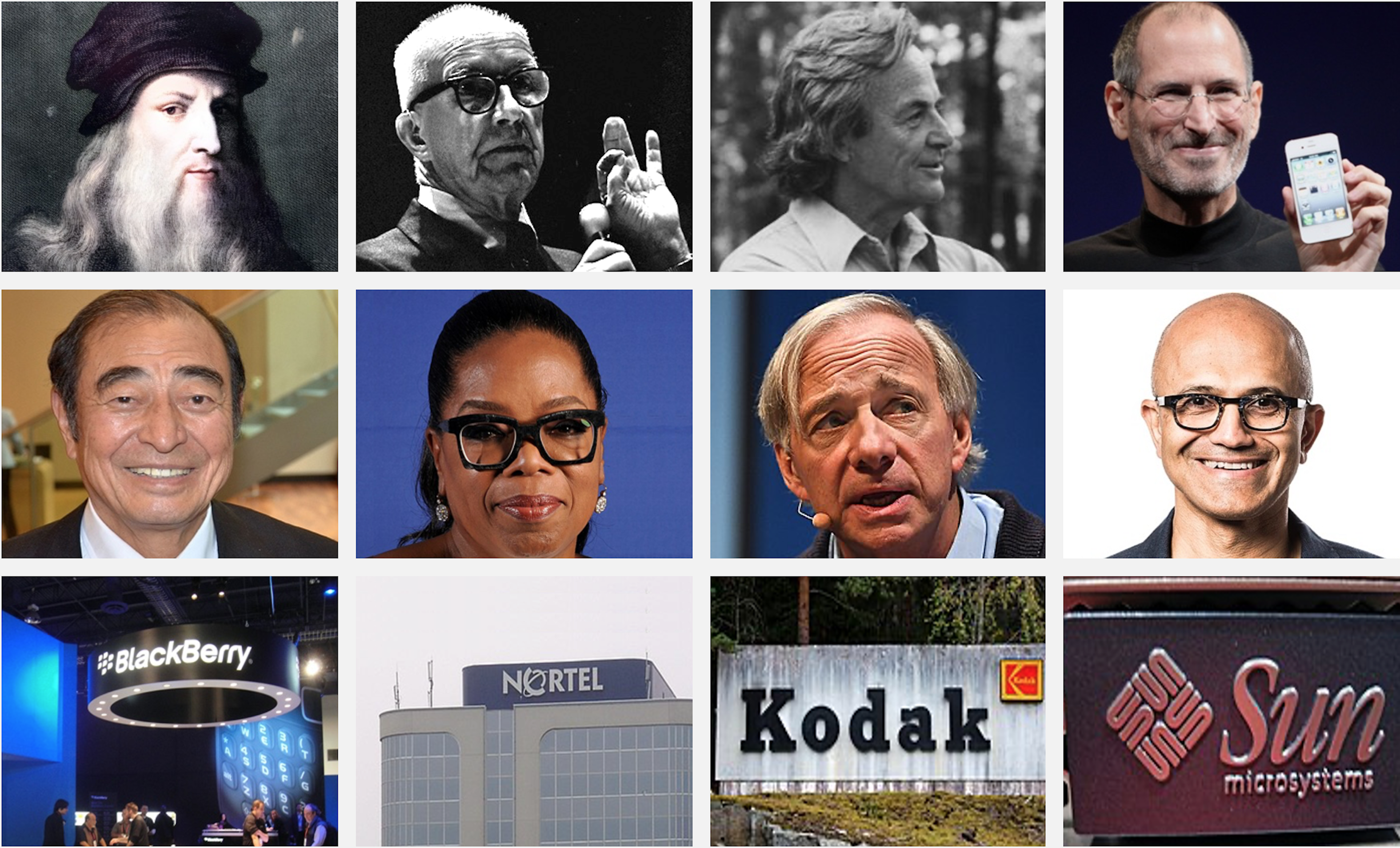
For a fascinating contrast to the outcomes at Sun Microsystems, compare their missteps with the transformation and resurgence of Microsoft beginning in 2014. Check out:
How Satya Nadella Led Microsoft’s Transformation into a 21st Century High-Performing Organization
{Added on Apr. 18, 2024. THIS is an OPTIONAL Text Module that could appear BEFORE starting the Introduction. It could, for example, be used to state a special point regarding how to get the most out of THIS Article.1This is a footnote IN that initial Text Module that would/could appear before the Introduction. This sentence in the Footnote should appear in bold italics.
Introduction
{This is the opening line of the Introduction. It is thus the article’s lead. This is where you must have a compelling opening that intrigues and hooks.
{This is the second paragraph, and as such it needs to elaborate on the opening and draw you in further … thus completely hooking the reader. In a longer Article like this, it should have at least 3 hooks. 3 strong emotional Curiosity Gaps that make it impossible not to want to read further. (This is the Quad 4 dimension: the key need in the choice of words is not just simplicity, but integrating sources of powerful curiosity at every step.}
{As a general rule, I don’t think you should have any footnotes in the Introduction.}
{This is the last line of the Introduction, and it should basically end with a massive Info Gap that will only be filled if the reader keeps reading.}
The Near Suicide
{This effectively is the opening line or lead of the QS 1 story. This part should read like great fiction, so you don’t want to have a footnote here either.}
{You might want to integrate a further Info Gap here – in which case you might do so by asking a specific question like: is it really possible that merely reframing his mind gave him new strength to rise above his depression? {In some cases, it might be appropriate to have a footnote here. 2DG: I think also in this form of Page/Article … you should frequently use the footnote just to add a further explanatory point when appropriate. For example, a bit of the details on what SPARC was … should be in the footnote so the Article flows very fluidly and yet if someone WANTS to get a quick answer to a ‘WHAT IS ___?’ … they can. See for example: Gottlieb, Jacqueline, Michael Cohanpour, Yvonne Li, Nicholas Singletary, and Erfan Zabeh. “Curiosity, Information Demand and Attentional Priority.” Current Opinion in Behavioral Sciences, Curiosity (Explore vs Exploit), 35 (October 1, 2020): 83–91.
{This would be a continuation of the story. This would be a continuation of the story.}
{This would be the basic wrap-up of the story. In the case of Buckminster Fuller, this is where you want to have a basic summary of what he went on to accomplish. The relevant detail to add here are the examples where he met and started working with new people, and how it did indeed take a couple of years before great things started to happen. But boy did they start to happen.
{This QS 1 section should then end with at least one question and maybe two or three. Such as: did forming a sense of purpose really have an effect on Fuller? What does science say about this? Since we now know so much about the human brain, has neuroscience shed any light on this?}
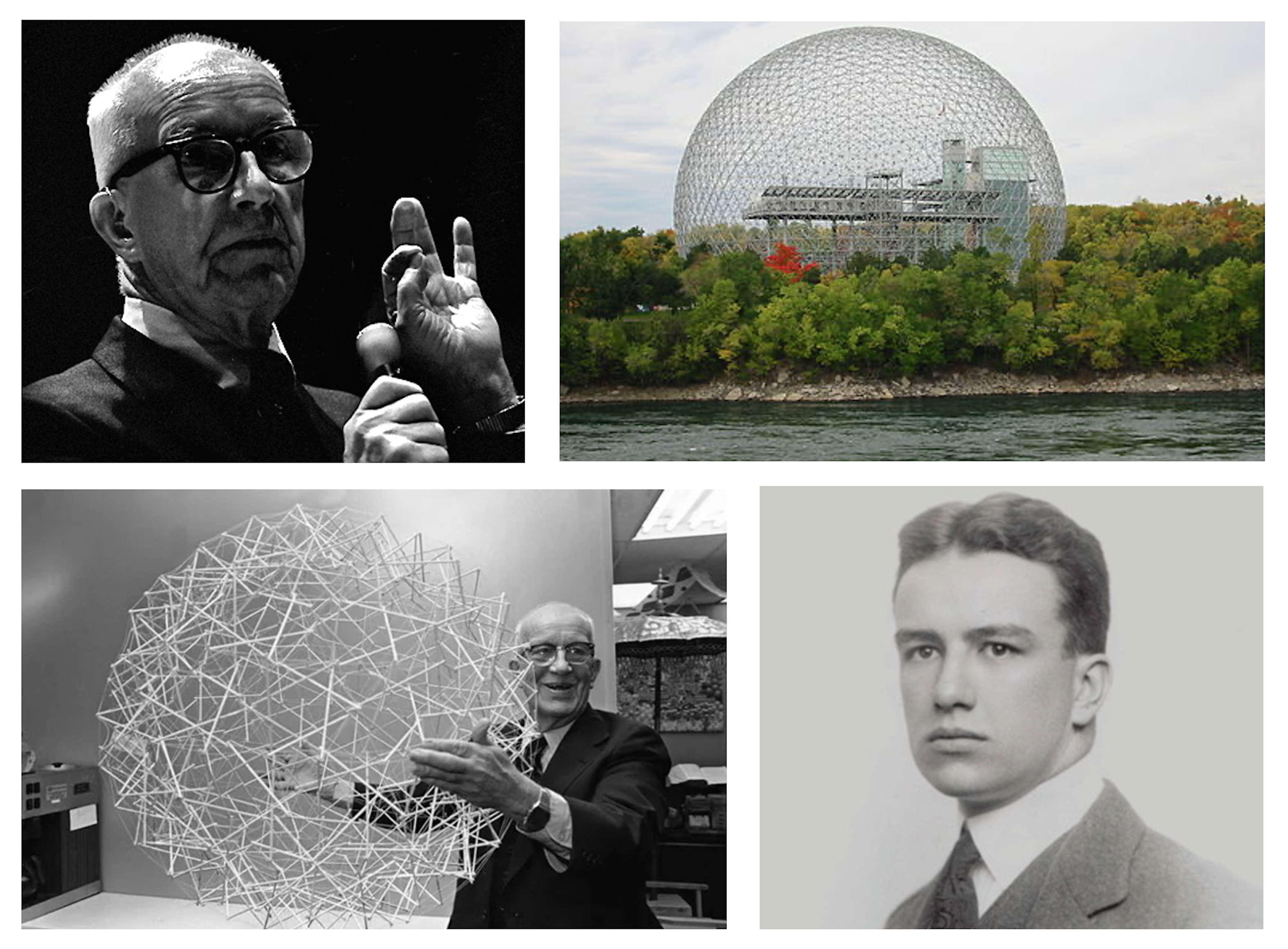
[SF Article Page Note]: The above Module is an Image Module. This is a Text Module to set out a newspaper-style description below the image and give credit to the source. These should appear in the Body of the Article. The LEAD Image at the start should generally be a Slider with at least two images and text below them.] SAMPLE TEXT HERE: The massive sign of the once-proud Sun Microsystems at 1 Hacker Way, in Silicon Valley. Source: Business Insider.
[NOTE re this SF: This ROW has also now been set to W = 88%, MW = 1280px]
[Apr. 18, 2024] This is a NEW/SEPARATE Text Module, for the second main section of the Body of the Article (Title 2 of the Body).3Check again that this Footnote appears in the proper order.
Body Title 2 … (Topic 2) [=H2]
An Attention-supporting Environment. The environment you work in has a major impact on how well you pay attention. The obvious first step is make sure your work environment is free from distractions. The science goes much further though. Just about everything in your environment either inspires learning or can be a distraction that diverts your attention.4See for example: Llorens-Gámez, Mar, Juan Luis Higuera-Trujillo, Carla Sentieri Omarrementeria, and Carmen Llinares. “The Impact of the Design of Learning Spaces on Attention and Memory from a Neuroarchitectural Approach: A Systematic Review.” Frontiers of Architectural Research, December 31, 2021.
Title 2, Sub-subhead 1 [=H3]
Social Motivation | Social Influence. This should be point 5] It would be great if you could get these sources of all the Top Methods … appearing readily to the right.5What’s clear to me now is that the ‘prime directive’ needs to be to teach … and that means offering FURTHER sources and references.
Distinguish Learning vs Performance Goals. Set both. Most people don’t. The industrial model of education conditioned everyone to focus solely on performance goals (think grades and test scores). Learn how to set specific learning goals — not just in school but all through your career. This builds a whole new level of motivation, and motivation sustains attention.6National Academies of Sciences, Engineering, and Medicine. How People Learn II: Learners, Contexts, and Cultures. Washington, DC: The National Academies Press, 2018.
Title 2, Sub-subhead 2 [=H3].
[previous text: … for example … when you get to Feedback … you should absolutely build into the references cites and notes to the insights re the Cognitive Biases … and how FEEDBACK is a core part of our ‘Weapons of Mass BS Detection.’ [Previous footnote: This for example would be a footnote that could refer to your other Articles on the ‘Weapons of Mass BS Detection.’]
Proper Workflow and External System. Science shows there are different types of Attention. Your Workflow should be designed so a given task focuses on the kind of attention needed for that task. For example, when you’re writing, write don’t edit. Editing requires a very different type of attention. 7See for example: … possible cite to Ahrens.
Title 3 … (if there is a third section, ie. this is NOT the ‘Next Steps | Key Takeaways section
Pomodoro Technique | The 2-Minute Rule. These methods tap into momentum motivation. Call it the ‘Just Get Started’ rule of focus.8See for example: [cite a paper that shows the science behind the Pomodoro Technique.
Next Steps | Key Takeaways
[April 18, 2024]: This is a new Module, added on Apr. 18. The SFCP should set out the standard practice and elements to include here. I’m first testing that that FN’s remain in their proper order.9This is the first FN in the Next Steps | Key Takeaways section. The FNs in this section could be particularly phrased in terms of providing ‘personal guidance’ from me … namely as to what next steps I recommend the reader take.
[Previous proposed SF TITLE for this section was Title 4 … Call to Implementation CTI [=H2]]
[Key Word or Phrase]. Good news here: not all attention is focused attention. In fact, you need to get good at doing the opposite of focused attention: relax! Take breaks. This shifts your brain’s attention to your subconscious mind, which is always working on something. Tap into it often.10See for example: cite a study … possibly cite Barbara Oakley here.
[Key Word of Phrase] . It’s a myth that there’s just one source of motivation. The top proven sources are: purpose motivation — having a clear why; flow motivation — being in a state of flow; and progress motivation — tracking and seeing your progress. Make sure your external system supports all of these. 11See for example: … This should now appear as the final footnote in the Article. Confirm that this is working.
LAST STEP D – Don’t forget to savour the pleasure of having completed another Article … and potentially having helped a very large number of people. Savour that, and let it be a big reward every time you hit publish and share.
References & Further Reading
- 1This is a footnote IN that initial Text Module that would/could appear before the Introduction. This sentence in the Footnote should appear in bold italics.
- 2DG: I think also in this form of Page/Article … you should frequently use the footnote just to add a further explanatory point when appropriate. For example, a bit of the details on what SPARC was … should be in the footnote so the Article flows very fluidly and yet if someone WANTS to get a quick answer to a ‘WHAT IS ___?’ … they can. See for example: Gottlieb, Jacqueline, Michael Cohanpour, Yvonne Li, Nicholas Singletary, and Erfan Zabeh. “Curiosity, Information Demand and Attentional Priority.” Current Opinion in Behavioral Sciences, Curiosity (Explore vs Exploit), 35 (October 1, 2020): 83–91.
- 3Check again that this Footnote appears in the proper order.
- 4See for example: Llorens-Gámez, Mar, Juan Luis Higuera-Trujillo, Carla Sentieri Omarrementeria, and Carmen Llinares. “The Impact of the Design of Learning Spaces on Attention and Memory from a Neuroarchitectural Approach: A Systematic Review.” Frontiers of Architectural Research, December 31, 2021.
- 5What’s clear to me now is that the ‘prime directive’ needs to be to teach … and that means offering FURTHER sources and references.
- 6National Academies of Sciences, Engineering, and Medicine. How People Learn II: Learners, Contexts, and Cultures. Washington, DC: The National Academies Press, 2018.
- 7See for example: … possible cite to Ahrens.
- 8See for example: [cite a paper that shows the science behind the Pomodoro Technique.
- 9This is the first FN in the Next Steps | Key Takeaways section. The FNs in this section could be particularly phrased in terms of providing ‘personal guidance’ from me … namely as to what next steps I recommend the reader take.
- 10See for example: cite a study … possibly cite Barbara Oakley here.
- 11See for example: … This should now appear as the final footnote in the Article. Confirm that this is working.